
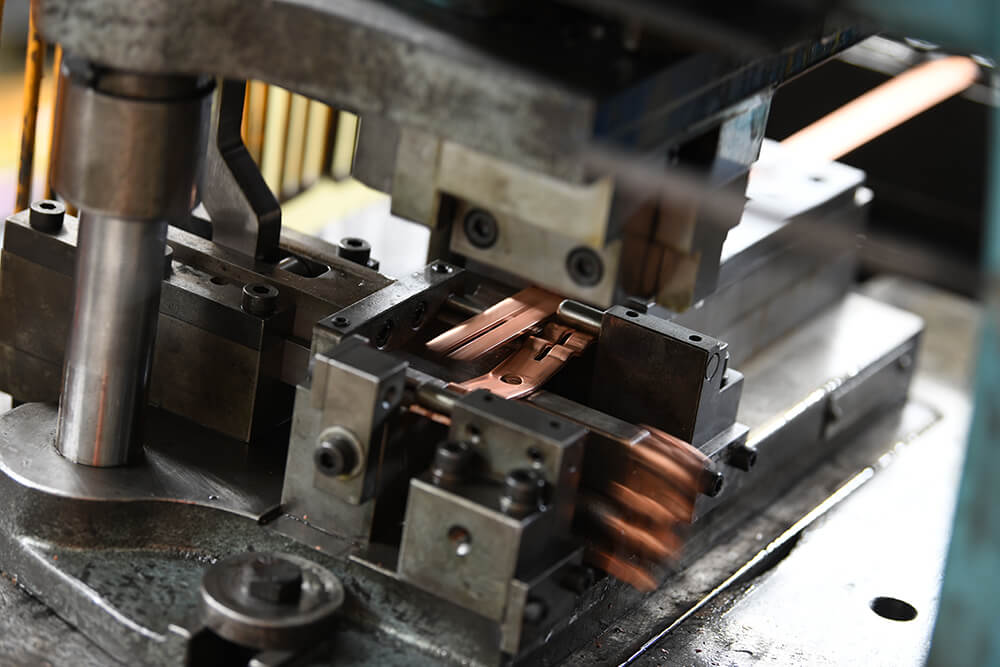
Pressed part manufacturing is a significant sector within Australian assembly and manufacturing circles. It is a method that commonly takes sheet or flat strip metal and transforms it into complex, functional components used in countless applications across a wide range of industries.
As a leading Australian manufacturer of springs, pressed parts and wire products, Marsh Alliance specialises in helping clients bring their strip metal pressed part designs to life.
Here’s what this manufacturing process involves, common challenges, and how the right design choices can save time, money, and frustration.
What Is Pressed Parts Manufacturing?
Pressed parts manufacturing works with strip metal rather than wire. Picture a ribbon of metal being fed into a press machine. While in its softer, malleable state, the strip can be cut, bent, or shaped into precise forms. Depending on the design, parts might go through a single press or several progressive stages to achieve the required finished part design.
Unlike coiling machines used for spring production, presses rely on tooling dies to and force form the — much like a waffle maker or sandwich press — that determine the shape of the finished product. These dies define the dimensions, bends, holes, or protrusions that give each part its functionality.
There are two main types of presses typically used:
Traditional presses — suited to complex parts requiring multiple, carefully sequenced operations.
Multi-slide presses — designed for faster cycles and simpler parts, capable of flattening, punching, and bending in one continuous process.
Pressed parts are everywhere. They can be found in automotive clips and brackets, electronic terminals, fasteners, household appliances, and construction fittings. While small in size, these parts often play a critical role in keeping larger systems functioning safely and reliably.
Common Issues in Poorly Designed Pressed Parts
Design flaws are one of the biggest challenges in pressed parts production, and they can quickly escalate into costly delays or product failures. Some of the most common problems include:
Burring on edges
If tooling isn’t sharp or well maintained, the cut edges of the part can develop burrs. These sharp fragments aren’t just cosmetic issues; they can pose safety hazards for end users, cause fitting problems in assemblies, or even damage other components.
Off-centre or irregular holes
Holes that aren’t cleanly cut or properly aligned can compromise the functionality of the part. For example, an off-centre hole in an electronic terminal may prevent it from fitting correctly into a circuit board, or a misaligned fastener hole in a bracket may stop it from being assembled onto machinery.
Misfeeds and misalignment
Press machines rely on strip metal feeding through with absolute precision. If guides aren’t accurate or sensors aren’t in place, the strip can slip or shift. This leads to parts being stamped out of position, wasted material, and — in the worst cases — damage to expensive tooling.
Tooling wear and poor tolerances
Pressed parts often require tight tolerances, especially in applications like automotive safety clips or aerospace components. If tolerances aren’t properly accounted for in the design, the part may fail to perform its function, leading to recalls, downtime, or safety risks.
These issues don’t just affect the look of a part. They can trigger longer lead times, costly rework, missed deadlines, and supply chain disruptions. For industries like automotive, electronics, or construction — where pressed parts are small but critical — such setbacks can halt production lines or delay major projects.
Design Tips for Cost-Efficient, High-Quality Pressed Parts
Design is at the heart of successful pressed parts manufacturing. A part that looks functional on paper can prove costly or difficult to produce if key manufacturing principles aren’t considered early on. The following guidelines can help ensure parts are efficient to produce, consistent in quality, and cost-effective over the long term.
Simplify the design where possible
The fewer processing steps a part requires, the better. Each additional bend, punch, or cut adds time, complexity, and opportunities for error.
A progressive tool might pass the strip metal through 10 –16 stages, but if the part can be designed to achieve the same outcome in fewer stages, production becomes faster and tooling maintenance is reduced.
For example, a clip designed with three bends instead of five may still achieve the required strength while halving the strain on the tooling.
Choose materials carefully
Material choice directly affects how easily a part can be produced and how long tooling will last. Soft annealed metals are easier to bend and press, making them ideal for parts like fastening clips or appliance brackets. These materials often require post-production heat treatment to lock in strength and resistance.
Harder materials, such as stainless steel, offer durability and corrosion resistance but are more expensive, harder on tooling, and can increase lead times if retooling is needed.
When possible, selecting a slightly softer grade of steel and then applying surface treatments (galvanising, powder coating, or heat treating) can achieve the same durability at a lower cost.
Strip layout (where the metal strip will be guided through the tool design), and optimising part coverage on the strip is also an important consideration for reducing the rate of scrap material produced and lowering overall material costs.
Apply realistic tolerances
While some applications — such as aerospace components or electronic terminals — require tight tolerances, applying unnecessarily strict tolerances across all parts increases cost and production time.
Excessively fine tolerances may also demand more complex tooling or slower production speeds. Designers should identify which dimensions are truly critical to function and allow flexibility elsewhere.
Optimise bend radii
Sharp bends may seem efficient in design software, but in reality, they can cause cracks, weaken the material, or increase tool wear. A rule of thumb is that the inside bend radius should be at least equal to the material thickness, though harder materials may require larger radii. This small adjustment in design reduces the risk of breakages and improves part longevity.
Consider hole placement and size
Holes are one of the most common features in pressed parts, but poor planning can lead to problems. Holes placed too close to the edge can weaken the part, leading to failures in service. Too many holes in close succession complicate the press stages and can distort the strip during production.
Large or complex hole shapes may demand slower press speeds or special tooling, driving up costs. When possible, designers should standardise hole sizes and placements to simplify tooling and ensure reliable alignment during production.
Minimise secondary processes
Every additional post-press process — deburring, filing, polishing — adds time and labour and potential for delays. By focusing on clean tooling design and proper material selection, parts can come off the press closer to their finished state, reducing rework and improving overall efficiency.
Example: Reducing Costs and Lead Times Through Smarter Tooling Design
Marsh Alliance was engaged to produce clips used in reinforced concrete pipes. These small, flat parts held rebar cages in place before the concrete was poured — minor components, but essential to the client’s process.
The client approached Marsh seeking a more efficient and reliable option, as their imported supply created delays. The design called for four different clip sizes, each previously made with a dedicated tool. Switching between tools took hours, adding significant inefficiencies across large production runs.
Marsh’s in-house team redesigned the tooling, creating a single tool with an adapting slide mechanism. This allowed quick adjustments between sizes without removing the tool from the press, reducing changeovers from hours to complete to around just one hour.
Because the client required hundreds of thousands of clips over a production run of just a few weeks, efficiency was critical. By streamlining the tooling within the press, Marsh reduced overall production time and labour costs while ensuring supply kept pace with demand.
Minimise Errors and Maximise Output with Marsh Alliance
Pressed parts manufacturing demands more than simply cutting and shaping metal — it requires precision, efficiency, and reliability. Even small design or tooling errors can lead to costly setbacks, which is why partnering with the right manufacturer is so important.
Marsh Alliance combines decades of expertise with in-house toolmaking to support clients from design through to full-scale production. With die beds up to 1.8m by 600mm square, we can produce a wide variety of complex or high-volume parts, running prototypes and trials to confirm accuracy before moving into mass production.
Our ability to heat treat, galvanise, or powder coat parts ensures they are durable and ready for use, while our press technology allows us to deliver hundreds of thousands — or even millions — of components within tight timeframes.

